


When "It Won't Happen to Us" Becomes a €480,000 Lesson
A Luxembourg SME with 50 employees thought their size made them invisible to attackers. One phishing email later, they were staring at nearly half a million euros in damages. Here's what every small business needs to hear.

"It won't happen to us." For a small Luxembourg company with just 50 employees, those five words marked the beginning of a nightmare. They believed cybercriminals only hunted big game, multinational corporations with deep pockets and high-profile data. Their modest size, they assumed, made them invisible. Then came an ordinary Tuesday morning that changed everything.
The attack began innocently enough: a routine-looking email landed in an employee's inbox. One click later, the first domino fell. Within minutes, systems began freezing. Within hours, the entire business ground to a halt. And within days, the true cost became devastatingly clear. Sales evaporated as orders couldn't be processed. Recovery teams commanded premium rates. Then came the GDPR fine, followed by the exodus of nearly half their customer base.
The Final Tally
€480,000 in total damages — enough to push the company to the brink of collapse. The cruel irony? Proper protection would have cost them around €20,000.
The Dangerous Myth of Being "Too Small to Matter"
This Luxembourg company's story reflects a broader crisis. Across Europe, small and mid-sized enterprises operate under a dangerous misconception: that their size shields them from cyber threats. The reality paints a starkly different picture.
Nearly half of all cyberattacks now target small businesses. While almost a third of SMEs have already experienced an attack, only 14 percent feel genuinely prepared to defend themselves. When disaster strikes, the average cost exceeds €200,000, a sum that can cripple or kill a small company.
Why have SMEs become such attractive targets? Not despite their size, but because of their vulnerabilities. Small businesses often operate without dedicated IT teams, postpone critical software updates due to daily operational pressures, and lack structured approaches to cyber risk. Cybercriminals have industrialized their operations to exploit precisely these weaknesses, knowing that SMEs represent easy wins with real financial returns.
"Cybercriminals aren't just going after the big fish anymore. SMEs are the easy targets — and most of them don't know it yet."
The Hidden Cascade of Consequences
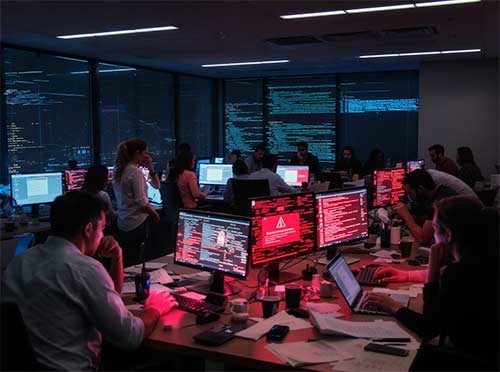
Consider what actually stops working: order processing systems go dark, leaving customers unable to purchase. Payroll systems become inaccessible, creating anxiety among staff. Communication channels fail, severing connections with suppliers and clients. Even basic operations like accessing contact lists or scheduling deliveries can become impossible.
Beyond these operational impacts lies the human cost. Teams feel helpless watching their work disappear behind encrypted walls. Leaders grapple with guilt over preventable damage while trying to project confidence. Employees face the stress of uncertain futures as the company struggles to recover. And customers, having lost trust in the company's ability to safeguard their interests, rarely return even after systems are restored.
This cascade of consequences transforms what might seem like a technical problem into an existential threat. The damage extends far beyond the immediate ransom demand or recovery costs, creating ripple effects that can persist for months or even years.
Building Real Protection Without Breaking the Bank
The stark contrast between that Luxembourg company's €480,000 loss and the €20,000 that could have prevented it illuminates an important truth: effective SME cybersecurity doesn't require enterprise-level complexity or budgets. It simply requires strategic thinking and consistent implementation.
Strong cybersecurity for SMEs rests on several foundational elements. First comes authentication and backup, ensuring that only authorized users access systems while maintaining recoverable copies of critical data. Next, basic but essential security tools form a defensive perimeter: properly configured firewalls, updated antivirus software, and email filters that catch suspicious messages before they reach inboxes.
Perhaps most critically, regular employee awareness training transforms your workforce from your greatest vulnerability into your first line of defense. When every team member knows how to recognize and report suspicious activity, the entire organization becomes more resilient.
The Three Pillars of SME Cyber Resilience
At Cubic Consulting, we've distilled effective SME cybersecurity into three interconnected pillars that align with how small businesses actually operate.
People
Your employees represent both your greatest risk and your strongest defense. One untrained click can compromise your entire network, while one alert employee can prevent disaster. Practical security awareness training pays dividends far exceeding its modest cost.
Processes
Security shouldn't be an afterthought, it should be woven into daily operations. From onboarding new employees to handling customer data, embedding security into standard workflows dramatically reduces risk without adding complexity.
Protection
This doesn't mean buying every security product on the market. It means choosing scalable, reliable tools that match your current needs while allowing room for growth. Not everything needs implementation immediately, but everything needs a plan.
Shifting from Denial to Readiness
The fundamental shift required isn't technological, it's psychological. Resilient companies don't say "It won't happen to us." They say "We're prepared if it does." This mindset shift transforms cybersecurity from a source of anxiety into a business strength. Just as you wouldn't operate without fire insurance or leave your office doors unlocked overnight, your digital infrastructure deserves equivalent protection.
Three Questions That Demand Honest Answers
Before closing this article, ask yourself:
How resilient is your business, really?
- How long could your business continue operating if your systems became completely unavailable for 48 hours?
- Could your employees confidently identify and report a sophisticated phishing attempt?
- Would your business survive losing 40 percent of your customer base?
If any of these questions creates uncertainty or discomfort, you're not alone. Most SMEs struggle with these same vulnerabilities. The difference lies in whether you address them proactively or wait until crisis forces your hand.
Don't Wait for the Wake-Up Call
Cubic Consulting helps SMEs build practical, affordable cyber resilience — without the fear-based selling. Book a free 30-minute call and let's find out where to start.


Why This Story Had to Be Told
Founder & Managing Partner, Cubic Consulting
I've had versions of this conversation more times than I can count. A founder calls us after the fact, systems down, lawyers involved, customers walking away. And almost every time, the same words come up: "We just never thought it would happen to us." That's not naivety. That's a lack of exposure to what the threat actually looks like in practice.
That's why I wanted to share this story. Not to scare anyone, but because the numbers are real and the pattern is avoidable. €480,000 versus €20,000 is not a close call. It's a decision that should never have been this difficult to make, and with the right advice, it doesn't have to be.
If you're unsure where your business stands, that's already the right place to start. Reach out, and let's have a straight conversation about what actually matters for your situation.